


What Internal Resistance Means for a Battery
Internal resistance is the opposition a cell puts up against current flow, and it climbs as the cell ages. If you are asking what is internal resistance in a battery, it is the reason a worn pack reads full but sags under load, which is your cue to replace it.
- Internal resistance is opposition to current flow inside the cell itself.
- Higher resistance makes voltage sag under load and shortens usable runtime.
- It rises mainly with age and oxidation, not with how often you recharge.
- A pack with high resistance can show a full charge yet deliver little power.

A Plain Definition
Every cell has a little built-in opposition to the movement of charge, and engineers call that internal resistance, or impedance. You can picture it as a narrow section of pipe in an otherwise open line. The lower it is, the more freely energy flows from the cell to the tool; the higher it gets, the more energy is wasted as heat inside the pack before it ever reaches the motor.
Here is the concrete version. Put a tired pack on a voltmeter with no load and it may show a healthy number. Ask that same pack to start a drill and the voltage collapses, because the current has to push through all that internal resistance. The energy is technically still in the cell; the cell just cannot hand it over fast enough to be useful.

Why It Rises Over Time
The main driver is age, not heavy use. As a cell sits through months and years, its internal chemistry slowly oxidizes and the pathways that carry charge become less conductive. That change is essentially one-way: cycling or recharging a tired pack will not scrub the resistance back out. This is why a battery can look fine on a charger and still be finished in practical terms.
Heat and deep discharges speed the process along, which is one more reason to keep a pack cool and avoid running it to empty every time. Still, even a carefully treated cell will drift upward in resistance eventually. It is normal aging, not a defect, and no amount of clever charging reverses it.
How It Shows Up on the Job
The symptom is a pack that feels weak rather than empty. A drill stalls sooner than it used to, a laptop shuts down with charge still showing, or a charger reports full in minutes because the cell can no longer accept much current. In each case the battery is not refusing to work; it simply cannot move energy past its own resistance quickly enough to keep up.
Telling this apart from a bad charger is worth a minute. Try the pack in a second device or on a known-good charger; if the sag follows the battery, the cell is the culprit. That is the point where another charging cycle is wasted effort and a fresh pack is the sensible fix.
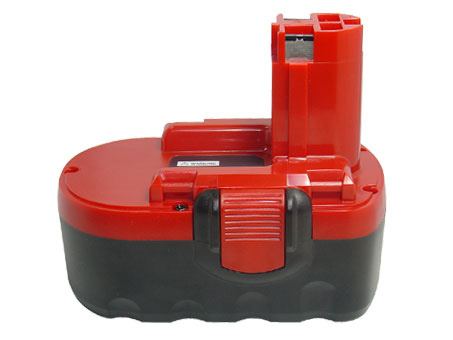
What It Means When You Buy
A brand new cell starts with low internal resistance, which is the single clearest reason a fresh pack feels so much stronger than the one it replaces. Every pack we sell is a brand new, 100% compatible aftermarket replacement with a 30-day money-back guarantee and a one-year warranty. Match the part number, and our Battery FAQs can help if that number has worn off.
Find the right replacement battery
Browse a brand new replacement power tool battery with fresh low-resistance cells and get your runtime back.
Frequently asked questions
Can cycling fix high internal resistance?
No. The rise comes from chemical changes inside an aging cell, and those changes do not reverse with another charge cycle. A full recharge might lift the voltage reading briefly, but the sag under load comes straight back. Once resistance is high, the honest answer is a replacement pack.
Is impedance the same thing?
In everyday battery talk, yes, people use impedance and internal resistance almost interchangeably. Strictly, impedance also accounts for how a cell reacts to alternating signals, but for choosing a replacement pack the practical meaning is the same: lower is better for delivering current.
Why does my pack read full but feel dead?
A voltmeter with no load barely asks anything of the cell, so even a tired one can show a healthy number. Under load, internal resistance drags the voltage down. That gap between the resting reading and real performance is the classic signature of an aged pack.
Related reading
Last reviewed by the batteries-company.com editorial team. Brand and model names are used to describe compatibility only; replacement packs are aftermarket products.
Editorial source: Q&A Collection 106 — “What is Internal Resistance” (FAQ #63). See the full collection-to-article map.

 Warehouse address: