


What Is Declining Capacity in a Battery
Declining capacity is the gradual loss of how much charge a pack holds as its cells age through normal use, and it is expected behavior rather than a defect. For a US shopper, telling normal fade from a fault helps you decide when a replacement battery is worth buying.
- Declining capacity is a slow, permanent fade, not a sudden battery failure.
- Each charge cycle leaves the cells able to store slightly less energy.
- A shorter runtime compared with last year is the most common symptom.
- Replace a pack once its runtime no longer covers a normal work session.
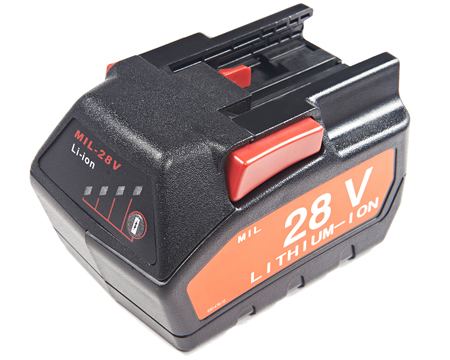
A Plain-English Definition
Think of capacity as the size of the fuel tank, not the speed of the engine. A brand new pack holds its full rated charge, and runtime scales from that number. Over months of use, the chemistry inside each cell gradually loses some ability to store energy, so the tank gets smaller every cycle. Nothing breaks; the pack just holds less than it did when it left the factory.
This is why a battery that once powered a full workday now asks for a recharge by early afternoon, even though it still charges to 100 percent on the gauge. The percentage describes how full the tank is, not how big the tank has become. Capacity and state of charge are two different things, and confusing them is a common reason people think a good pack has gone bad.

A Concrete Example You Can Picture
Picture a laptop that ran about four hours on a fresh pack when you bought it. After a year of daily charging, the same machine gets roughly two and a half hours before the low-battery warning. The gauge still reaches 100 percent, but the pack stores less total energy than it used to. That steady, months-long slide is declining capacity in everyday use.
Nothing in that example suggests a faulty battery. The decline is gradual and one-directional: capacity does not bounce back on its own, because the changes inside the cells are permanent. Heat and repeated deep discharges can speed the fade, while gentle use and cool storage slow it, but no charging routine reverses it completely.
What Causes the Fade
If you have wondered why does my laptop battery hold less charge over time, the short answer is chemistry. Each charge and discharge cycle drives small, irreversible changes in the cell materials, and those add up over hundreds of cycles. A Li-ion battery pack also ages slowly even when it sits unused, which is why calendar time matters alongside how often you recharge.
Some older NiCad and NiMH packs had a related issue called memory effect, where shallow discharging made them appear to lose capacity prematurely. Modern lithium packs do not suffer from that, so their fade is almost entirely about age and use. Either way, the pattern is the same: a slow, permanent reduction in how much charge the pack can hold.

Reading Capacity When You Shop for a Replacement
Capacity is one of the numbers worth comparing on a replacement laptop battery, because a higher amp-hour rating generally means longer runtime between charges. Match the voltage and part number first, then consider cell quality and the safety circuitry that manages charging. Every pack we sell is brand new and 100% compatible, backed by a 30-day money-back guarantee and a 1-year warranty.
Find the right replacement battery
When runtime no longer covers your day, browse a compatible replacement battery or charger matched to your exact model and part number.
Frequently asked questions
Is declining capacity a defect?
No. It is the normal, gradual aging of the cells inside a rechargeable pack, and every chemistry experiences it. A sudden loss of runtime after only a few charges is different and worth checking, but a slow fade over a year or more is simply the battery doing what batteries do.
Can I restore a faded battery by cycling it?
Not the capacity itself. Fully draining and recharging a lithium pack can recalibrate the fuel gauge so the percentage reads more accurately, but it does not put lost capacity back into the cells. Once the chemistry has faded, the only real fix is a fresh replacement pack matched to your model.
When should I replace a faded pack?
When a full charge no longer gets you through a normal session, it is time. Compare the amp-hour rating and voltage on your old battery with a compatible replacement, and check the part number so the new pack fits. Our 30-day money-back guarantee gives you room to confirm the fit at home.
Related reading
Last reviewed by the batteries-company.com editorial team. Brand and model names are used to describe compatibility only; replacement packs are aftermarket products.
Editorial source: Q&A Collection 104 — “What is declining capacity” (FAQ #61). See the full collection-to-article map.

 Warehouse address: