How Space-Age Computing Shaped the Battery in Your Laptop
The first portable computers were defined by what they could not do: run without a wall socket. Getting rid of that cord took decades of work, and the battery was the hardest part.
By the batteries-company.com Team · Updated ·
Key takeaways
Early portable machines were 'luggable' because they still needed mains power.
NASA's real contribution was testing and funding, not inventing the laptop.
Lithium-ion won because it was lighter and had no memory effect.
Today's replacements are designed around the same weight-versus-runtime trade-off.
The modern notebook pack is the result of forty years of shrinking trade-offs.
The Machines That Came Before
It is tempting to credit one inventor with the laptop. The reality is messier and more interesting. The Osborne 1, released in 1981, could be carried, but at roughly 24 pounds and with no battery at all, it was really a suitcase with a screen. The Epson HX-20 from the same year had a built-in rechargeable pack and a small display, making it closer to what we would now call a notebook. The GRiD Compass, designed by Bill Moggridge and released in 1982, introduced the clamshell shape we take for granted.
NASA adopted the GRiD Compass for the Space Shuttle program and flew it on missions in the 1980s. The agency did not invent the machine, but it did something just as important: it bought early units, demanded they survive launch forces and microgravity, and proved that a portable computer could be mission-critical gear rather than a novelty. That kind of real-world pressure tends to move an industry forward faster than a laboratory ever does.
Why the Battery Became the Bottleneck
Shrinking a computer turned out to be easier than shrinking its power source. Early designs used nickel-cadmium cells, which were heavy and suffered from memory effect: recharge them after only a partial discharge and they gradually forgot how much charge they could hold. Nickel-metal-hydride packs improved capacity and tolerances, but they still weighed plenty.
Lithium-ion changed the calculation. A Li-ion cell could store as much energy as NiMH while weighing roughly 20 to 35 percent less, and it did not develop memory effect. For a device you carry, that difference is everything. It is the reason a modern notebook can stay thin enough to slide into a bag and still run for hours.
Voltage and connector fit matter more than the shape of the adapter.
Heat was the other hurdle. In space, there is no air to carry warmth away, so engineers had to design casings and layouts that could shed heat passively. Those material choices influenced the magnesium-alloy frames and careful component spacing that later appeared in consumer laptops. Solid-state storage followed a similar path: demand for reliable data in a harsh environment pushed the industry away from fragile spinning disks.
What This Means When You Replace a Pack
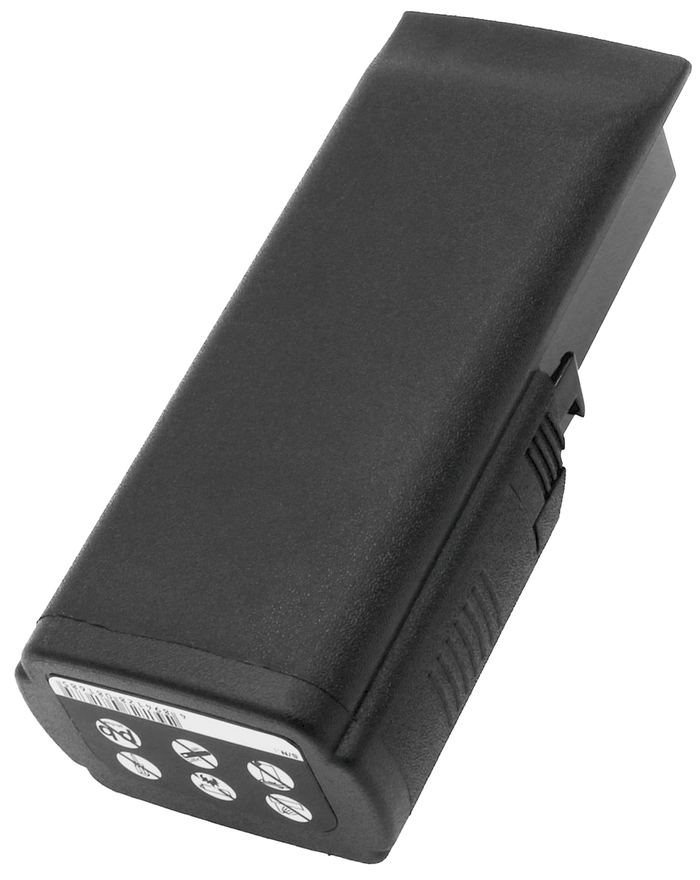
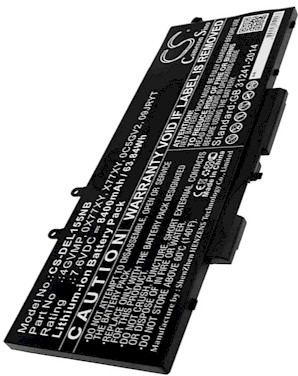
The same balancing act still applies. A replacement laptop battery has to fit a fixed cavity, stay within a safe voltage range and deliver enough current under load. That is why matching the part number is more reliable than guessing from the laptop model alone. Two machines from the same family can use different packs depending on the production batch.
Voltage should sit close to the original rating, and capacity can usually be higher without causing trouble. Physical fit is non-negotiable. If a pack needs to be forced into the bay, stop. A replacement that seats cleanly and communicates properly with the device will save a great deal of confusion later.
A slim pack still needs the same electrical care as its bulkier ancestors.
Occasionally a new battery will not report its charge correctly because the laptop's firmware expects to see an original pack. A BIOS update from the manufacturer often resolves this. If it does not, give the battery a full charge and a couple of normal cycles before deciding anything is wrong. Most of the time the gauge settles down on its own.
We supply brand new, fully compatible replacement packs with a 30-day money-back guarantee and a one-year warranty. If you are unsure which pack belongs in your machine, send us the part number from the old battery and we will confirm it before you buy.
Pro tip: Take a photo of the old battery's label before you recycle it. The part number is usually printed on a strip that is easy to misread once the pack is out of the machine.
Find the right replacement battery
From a discontinued notebook to a daily driver, the right pack brings an older machine back into service.
Bill Moggridge designed the GRiD Compass, released in 1982, and it introduced the clamshell shape. NASA did not invent it but funded, tested and flew early units, which proved the idea worked in the real world.
Why did laptops move from nickel-cadmium to lithium-ion?
Lithium-ion held similar energy at roughly 20 to 35 percent less weight and had no memory effect. For a device you carry, that combination was decisive.
Will a replacement battery need a BIOS update?
Occasionally. If a laptop's firmware expects an original pack, the charge gauge may read oddly. A BIOS update from the manufacturer usually resolves it; otherwise, a full charge and a couple of normal cycles often settle the reading.




 Warehouse address: